Python is a dynamically-typed language, which means that variable types don't need to be explicitly declared, and types can change at any point in the program. While this makes Python code more flexible and easier to write, it can also make it more prone to errors.
To address this issue, Python introduced built-in support for type checking with version 3.5, allowing developers to specify the expected types of variables, function parameters, and return values. Type checking improves code readability and helps catch errors before they occur.
Python's typing module allows developers to declare types for variables, function parameters, and return values.
Here's an example:
from typing import List

def sum_numbers(numbers: List[int]) -> int:
    return sum(numbers)
In this example, we use the List type from the typing module to declare that the numbers parameter is a list of integers. The function returns the sum of the integers.
Using type hints in Python code can help:
- Improve code readability: Type hints can provide additional information to understand code faster and make it more self-documenting.
- Boost developer productivity: Modern IDEs like VSCode can display type hints while writing code and provide autocompletion based on the expected types.
- Prevent type-related errors: By using static analysis tools like
mypyorpyright, developers can catch type errors before running the code. These tools can identify type mismatches and highlight them in the code editor.
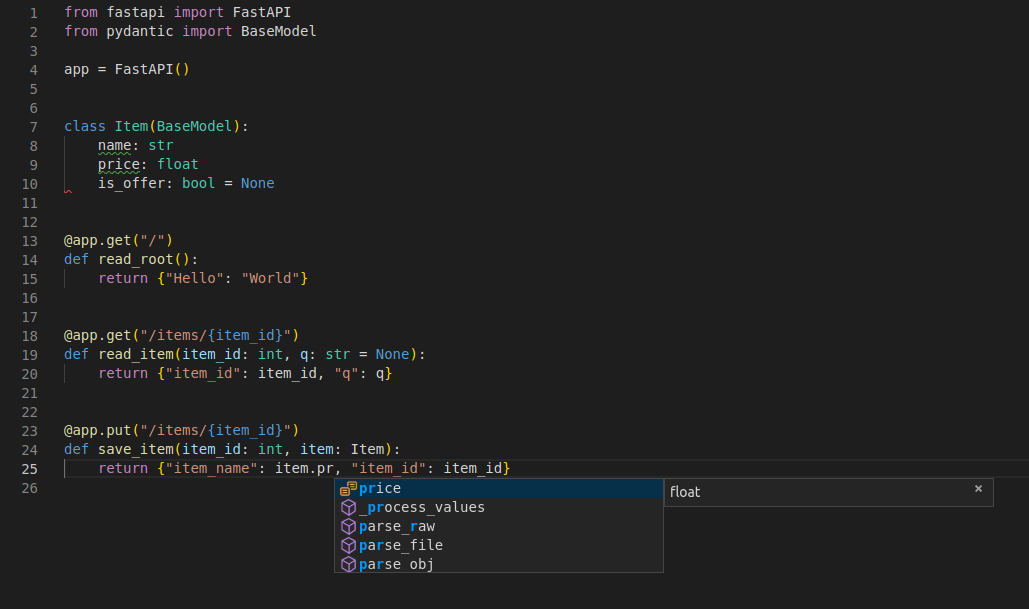
In addition to these benefits, type checking can also help make code more maintainable and easier to scale as the codebase grows. By explicitly specifying types, developers can more easily understand and modify code written by others, reducing the likelihood of introducing errors or causing regressions.
In conclusion, type checking in Python can help catch errors before they occur, improve code readability, boost developer productivity, and make code more maintainable. By using Python's built-in typing module and static analysis tools like mypy or pyright, developers can write more reliable and scalable Python code.
In my next blog post, I'll delve into some basic and advanced types in Python and explore how to use them effectively in your code. Stay tuned!
'Development' 카테고리의 다른 글
| Building and Deploying Web Components with Svelte (0) | 2023.12.30 |
|---|---|
| Writing Python Code Like a Pro: A Deep Dive into Type Checking #5 (0) | 2023.03.25 |
| Writing Python Code Like a Pro: A Deep Dive into Type Checking #4 (0) | 2023.03.25 |
| Writing Python Code Like a Pro: A Deep Dive into Type Checking #3 (0) | 2023.03.23 |
| Writing Python Code Like a Pro: A Deep Dive into Type Checking #2 (0) | 2023.03.22 |


